

Micro/Nanofluidics Lab
This is the main chemistry where all aqueous samples are prepared and characterized. We can characterize particle solutions by measuring the pH, size distribution and zeta potential.

| [h4]Optics I[/h4] Optics I contains two TE 2000 and one AZ100 microscopes. | 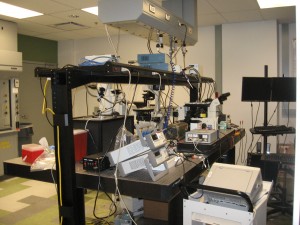 |
| [h4]Optics II[/h4] The work performed in room include microfluidic and PEM fuel cells and low noise patch-clamp current measurement system. | 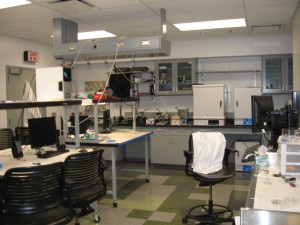 |
| [h4]Laser Ablator Room[/h4] The Laser Ablator Room houses the laser ablator and drill press. We routinely use the tools in this room to fashion microfluidic fuel cell and microscope housings by cutting and drilling glass, acrylic and mylar. | 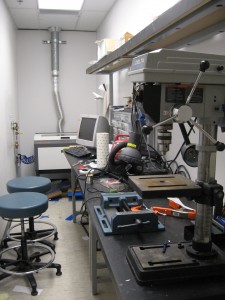 |
| [h4]AZ100 Microscope[/h4] The AZ100 has variable magnification and is useful for looking at larger samples using brightfield and epifluorescence illumination. | 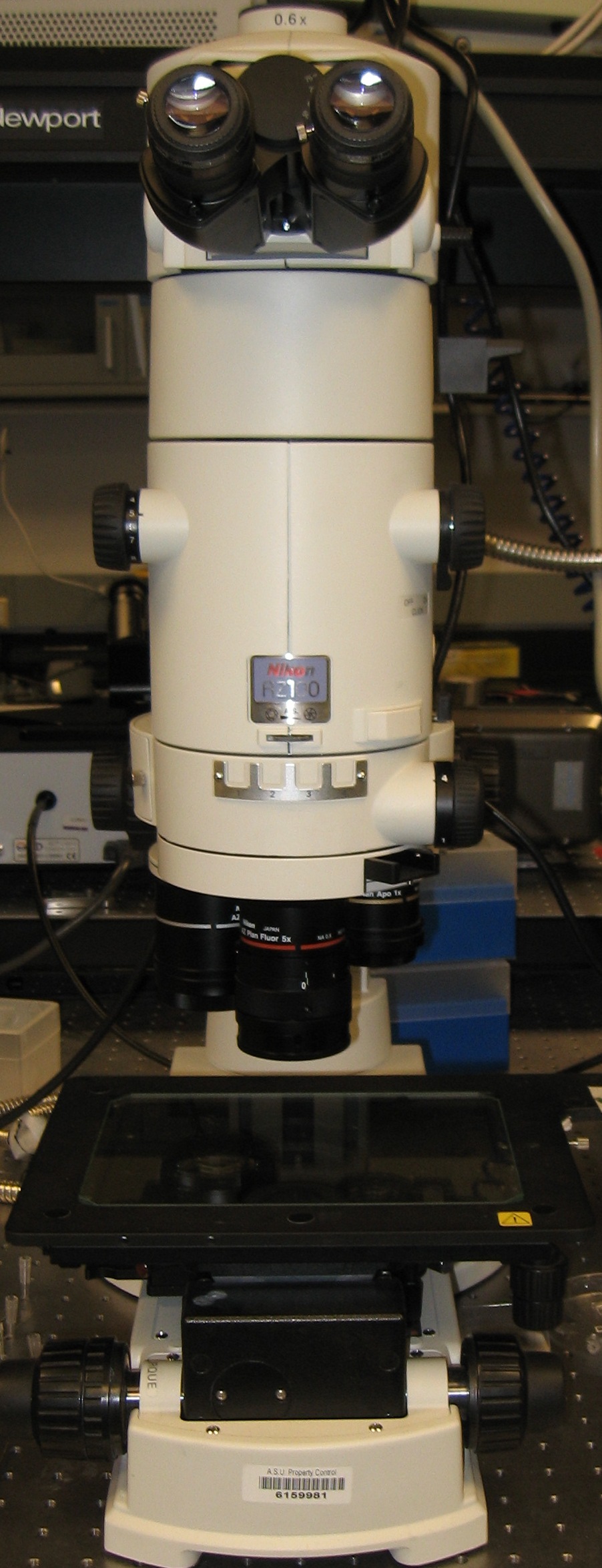 |
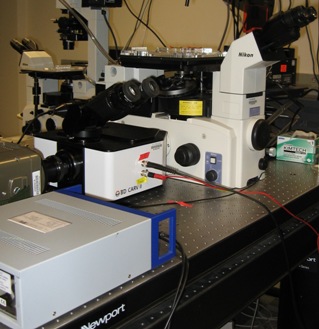
| [h4]High speed confocal system [/h4] The high speed confocal system takes images at up to 3000 fps and removes out of focus light using spatial filtering via a disk of pinholes in a conjugate focal plane to the microscope objective. |
 |
| [h4]Eclipse Epiflourescent microscope[/h4] Our epifluorescent microscope is commonly used for epifluorescence, DIC, and brightfield illumination. | 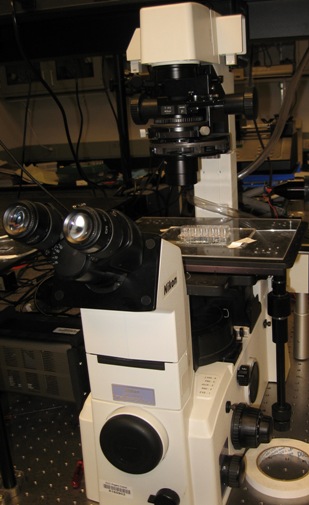 |
| [h4]Dynamic Light Scattering Instrument[/h4] The DLS is used for particle sizing and zeta potential measurements. | 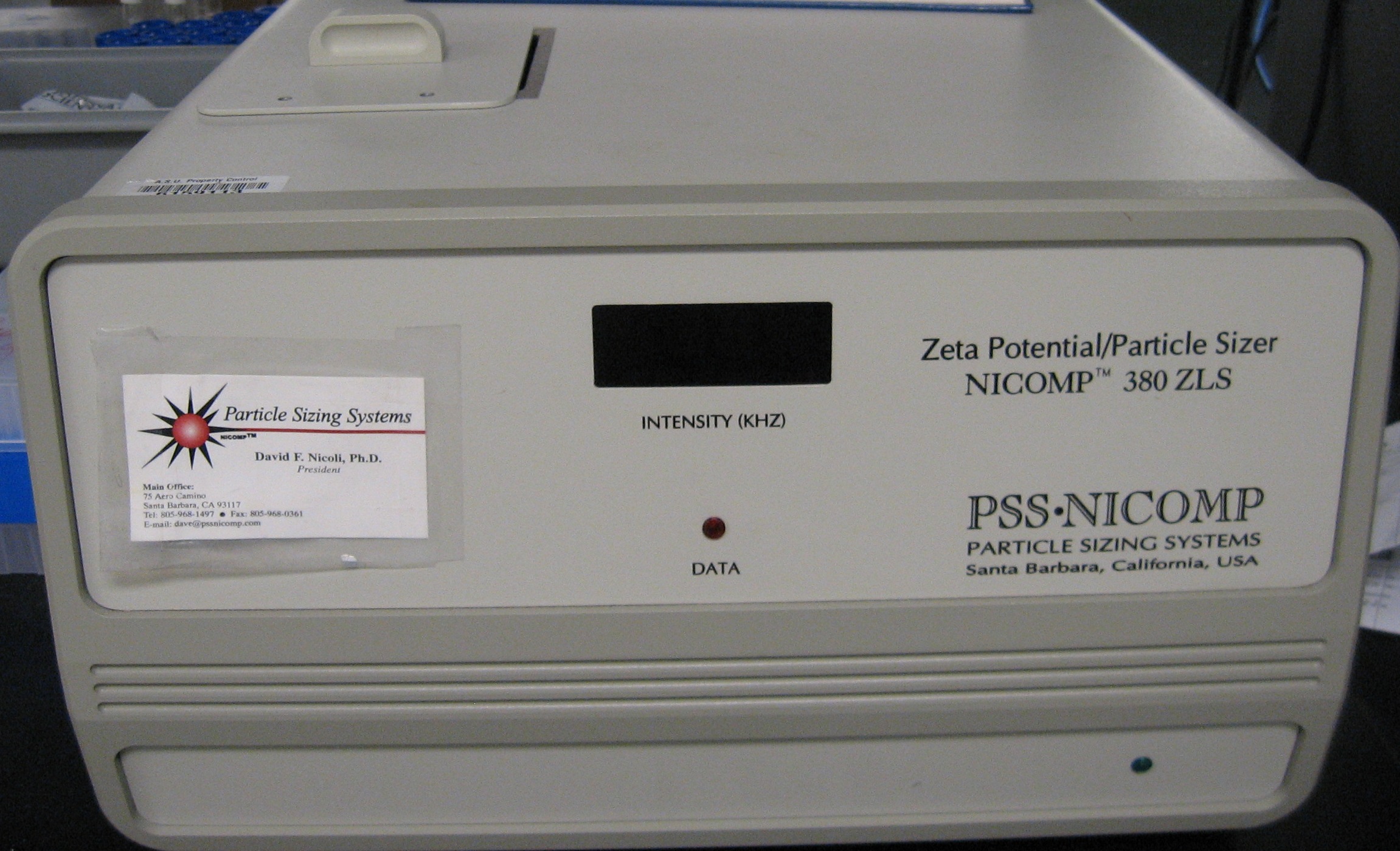 |
| [h4]Hydrogen Generator[/h4] We use the hydrogen generator for our work on PEM fuel cells. | 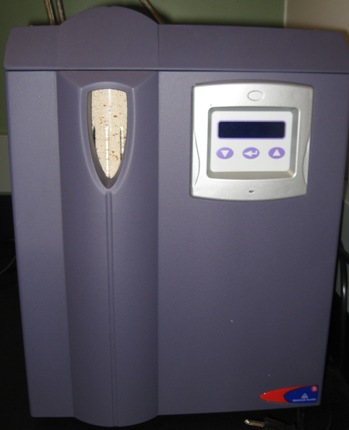 |